Recording lectures that do not look like a hostage video
Light, a cheap microphone and captions will do more for your lectures than a rented studio in South Melbourne — and your NBN upload will thank you.
By Tom Brennan, Contributor in Adelaide · 18 March 2026 · 8 min read
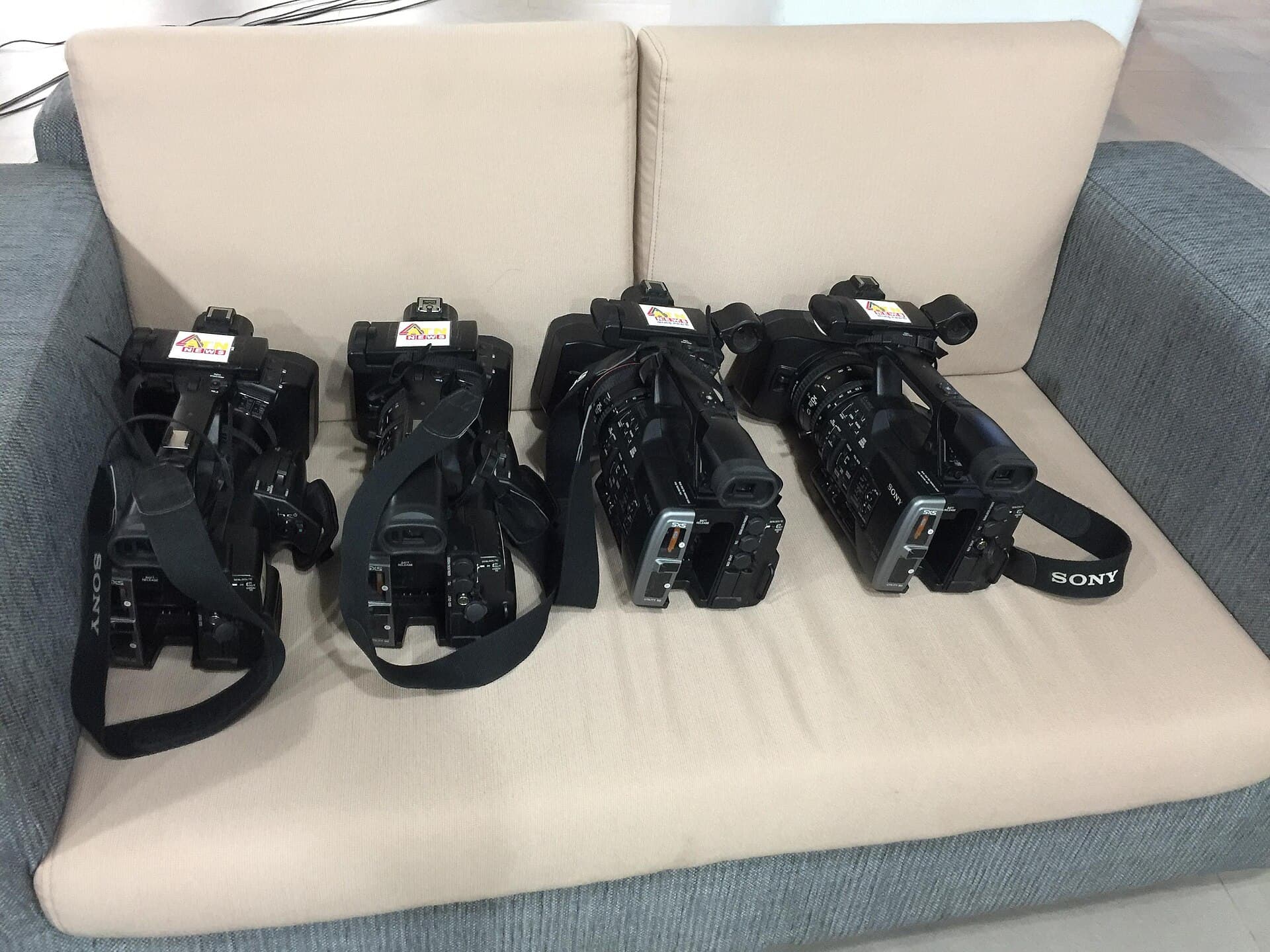
Photograph: Nurunnaby Chowdhury (Hasive) / Wikimedia Commons · CC BY-SA 4.0. See the image credits page.

The hostage video is a genre. Overhead fluoro, laptop camera up the nose, a ring light that turns the eyes into coins, audio that sounds like it was recorded inside a biscuit tin, and a slide deck designed for a ballroom. Australian students have sat through thousands of these since 2020. They will forgive an ordinary room. They will not forgive the feeling that they have been detained by a PowerPoint.
You do not need a studio in South Melbourne. You need light on your face, a microphone that is not the laptop hole, captions, and files that will actually leave the house on an NBN connection in winter. This is a production note for people in the creators hub who already have something to teach. If you do not yet have a finishable outline, go back to planning a course people complete before you buy a light.
Professional, here, means a student can watch this after a late shift and not work to hear you. It does not mean a lower-third that says “thought leader”.
Light is free until you make it worse
Face a window. That is the whole first lesson. A south-facing window in Adelaide in the afternoon, a shaded balcony in Brisbane, a kitchen window in Hobart that does not have the sun punching the side of your head — sit so the light hits your face, not the back of your skull. Backlight is how you become a silhouette with opinions.
At night, one cheap LED panel or even a daylight bulb in a lamp, slightly off to the side and in front, will beat the overhead. Overheads are how every Australian open-plan office makes staff look ill. Do not add a second coloured light because a YouTube thumbnail did. You are teaching a toolbox talk or a BAS, not directing a music video in Fitzroy.
Turn off the ring light if it is making a white circle in the glasses. Many trainers wear glasses. Many ring lights were sold to people who do not. A larger, softer source further away is kinder. A white wall opposite a window is a reflector you already own.
Look at a still frame before you record the hour. If you would be embarrassed to put that still on the credits page next to a properly exposed photograph, fix the light. Five minutes of this saves five hours of “we’ll grade it in post”, which you will not do.
Buy a microphone before you buy a camera
Viewers will tolerate a soft image. They will not tolerate the sound of a dishwasher, a bar fridge and a laptop fan competing with your explanation of incident reports.
A wired lavalier clipped on a shirt, running into the phone, is enough for talking-head lessons. A USB microphone on a short stand, a handspan from your mouth and slightly off-axis, is enough for desk lessons. In Australia you can still buy either for less than a week of casual training work. You do not need a broadcast mixer. You do not need the microphone a podcast bro named after a condiment.
What you need is a quieter room. Soft furnishings, a closed door, the rangehood off, the phone on silent, the child-and-dog negotiation completed or rescheduled. Tiled kitchens and empty garages are echo chambers. A bedroom with a wardrobe full of clothes is an accidental booth. Many good Australian courses have been recorded in the latter.
Test with headphones. If you hear the room more than the words, move the mic closer and talk a little less loud. Closer and quieter beats distant and projected. Projecting is for the night class in a concrete room at TAFE. The microphone is already in the front row.
Do not use wireless anything on the first setup unless you enjoy pairing problems ten minutes before a cohort. Cables are unfashionable and reliable.
A phone is a camera if you treat it like one
A recent phone, cleaned lens, locked exposure, at eye height, in landscape unless you have a good reason to send students a vertical lecture they cannot read a spreadsheet on. The good reason is almost never “that is how I hold it”.
A $30 tripod or a stack of books that does not slowly sink will do more than a $2,000 camera you have not learned. If you already own a webcam from the last lockdown, check whether it still overexposes your forehead. Many do. The phone is often kinder.
Frame your head and the top of your shoulders with a little space above the hair. Do not sit two metres back so the students can admire the recycling. Do not sit so close they can count fillings. If you share slides, record the slides cleanly and cut to your face when you are actually saying something that needs a face. A tiny talking head in the corner of a dense slide is how people get a headache in Campbelltown.
Backgrounds: a tidy shelf is fine. A fake beach is not required. A brand banner behind your head will read as a hostage logo. A closed door is better than a hallway in which a life is happening, unless you have warned the household and accepted the dog. Students do not mind a lived-in Australian room. They mind chaos they have to listen around.
Clothes: avoid the fine stripe that turns into a dance on camera. That is the entire fashion note.
Captions are part of the recording, not a favour
If they cannot read it, they cannot use it on a tram, in a ward tea room, or with the sound off while a child sleeps. Captions are not a nice-to-have for a course you sell in Australia. They are how a large part of the audience hears you, including people who would never call themselves deaf and people whose first language is not the one you are teaching in.
Auto-captions from the platform are a draft. Read them. “BAS” becoming “bass” is funny once. “Duty of care” becoming something you would not put on a slide is a problem. Budget an hour of clean-up per hour of finished video the first time you do this. It gets faster.
Burned-in captions are a last resort when a platform will not carry a caption file. They wreck translation and they wreck the student’s ability to turn them off. Prefer a proper caption track. The longer treatment of this sits in accessibility and WCAG for online courses. The production rule is simpler: do not ship a lecture you have not watched with the sound down.
Transcripts help the student who wants to search. They also help you, six months later, when you cannot remember which clip mentioned the Fair Work Commission and which one mentioned the council.
NBN upload is a planning constraint, not a personality flaw
A lot of Australian creators still upload from a house that was sold as “NBN” and behaves like a wet string after 7pm. Evening congestion is real in suburbs that look fine on a map. Rural fixed wireless and some apartment copper are worse.
Plan for it.
- Record locally, always. Do not live-record a course lecture straight to the cloud unless you enjoy losing the middle.
- Export 1080p or even 720p for talking heads. Screen recordings of software may need the extra pixels. Your face does not.
- Upload overnight, or from a workplace connection you are allowed to use, or from the library if that is the honest option. The State Library will not judge your render.
- Do not stack four 4K files and a bonus meditation to upload on launch morning.
- If you teach live, have a phone hotspot as a sullen backup and a slide deck that still works when your face freezes. Tell the cohort you will send the recording. Then actually send it.
Compression is not a moral failure. Students on a phone outside a hospital in Townsville, or on a farm near Esperance, asked to learn the thing. They did not ask to buffer your pores. If a lesson is crucial, offer the audio and the slides as well. That is how you keep the week alive when the video will not.
A studio with symmetrical lighting will not fix an upload that dies at 42 per cent. The spare room with a scheduled overnight transfer will.
You do not need a studio. You need a repeatable corner
Pick one corner of the house and leave the lamp there. Repeatable beats impressive. Students notice continuity even when they cannot name it. A course that jumps from a car, to a café, to a bathroom mirror, to a rented podcast studio in Richmond is a vlog. A vlog is a different job.
Batch the recordings on the same afternoon if you can. Same shirt is optional. Same sound is not. Check the mic battery — if you ignored the cable advice — and the phone storage before you start the sincere introduction for the fourth time.
Edit like a teacher, not a YouTuber. Cut the cough, the cat, the forty seconds where you found the right screen. Leave a breath. Do not cut so hard the student cannot think. Jump cuts every clause are how you give a cohort nausea. A lower-third on every obvious noun is how you look like breakfast television.
Music under instruction is almost always a mistake. If you add it, put it on the bumper and take it off when you talk. People are trying to hear a number.
A simple structure for each clip, which you can say out loud before you press record:
- The one action this lesson exists to unlock.
- The demonstration.
- The mistake you see every term.
- The task, with a time estimate.
If you cannot say those four lines, you are not ready to record. You are ready to go for a walk.
A short working checklist
Before you call the lecture finished:
- Face lit from the front, not the ceiling.
- A microphone that is not the laptop, in a room with some soft surfaces.
- Phone or camera at eye height, landscape, a frame you would accept as a still.
- Captions you have actually read, and a transcript if the lesson is long.
- A file size and resolution your NBN can upload this century.
- A version that still teaches if the video fails — slides, checklist, audio.
- No background music under the instructions.
- A corner you can use again next month.
The students who pay you are not commissioning a documentary. They are trying to finish a module before the household wakes up. Look like a person who prepared. Sound like a person in the same room. Write the words down. That is professional enough for a course that wants to be finished, and it costs less than a studio you will visit twice and then ghost.
Questions readers send the desk
- Do I need a real camera to look professional?
- No. A recent phone on a cheap tripod, with the lens at eye height and a window in front of your face, beats a DSLR pointed at a ceiling downlight. Buy the microphone first.
- What is the minimum I should spend on sound?
- A wired lav or a decent USB microphone in the $80 to $200 range will do. The room matters more than the logo on the mic. Soft furnishings beat a tiled kitchen.
- Should I film in 4K if my NBN upload is slow?
- Record in a sensible HD. Upload overnight. Nobody learning bookkeeping in Broome asked for 4K pores. They asked to hear you and read the captions.