Course platforms and providers
Open Universities Australia, explained without the brochure
OUA is a marketplace for real university subjects, not a university. Here is how partner unis, HELP, census dates and withdrawals actually work.
By Amelia Hart, Editor in Melbourne · 4 March 2026 · 9 min read
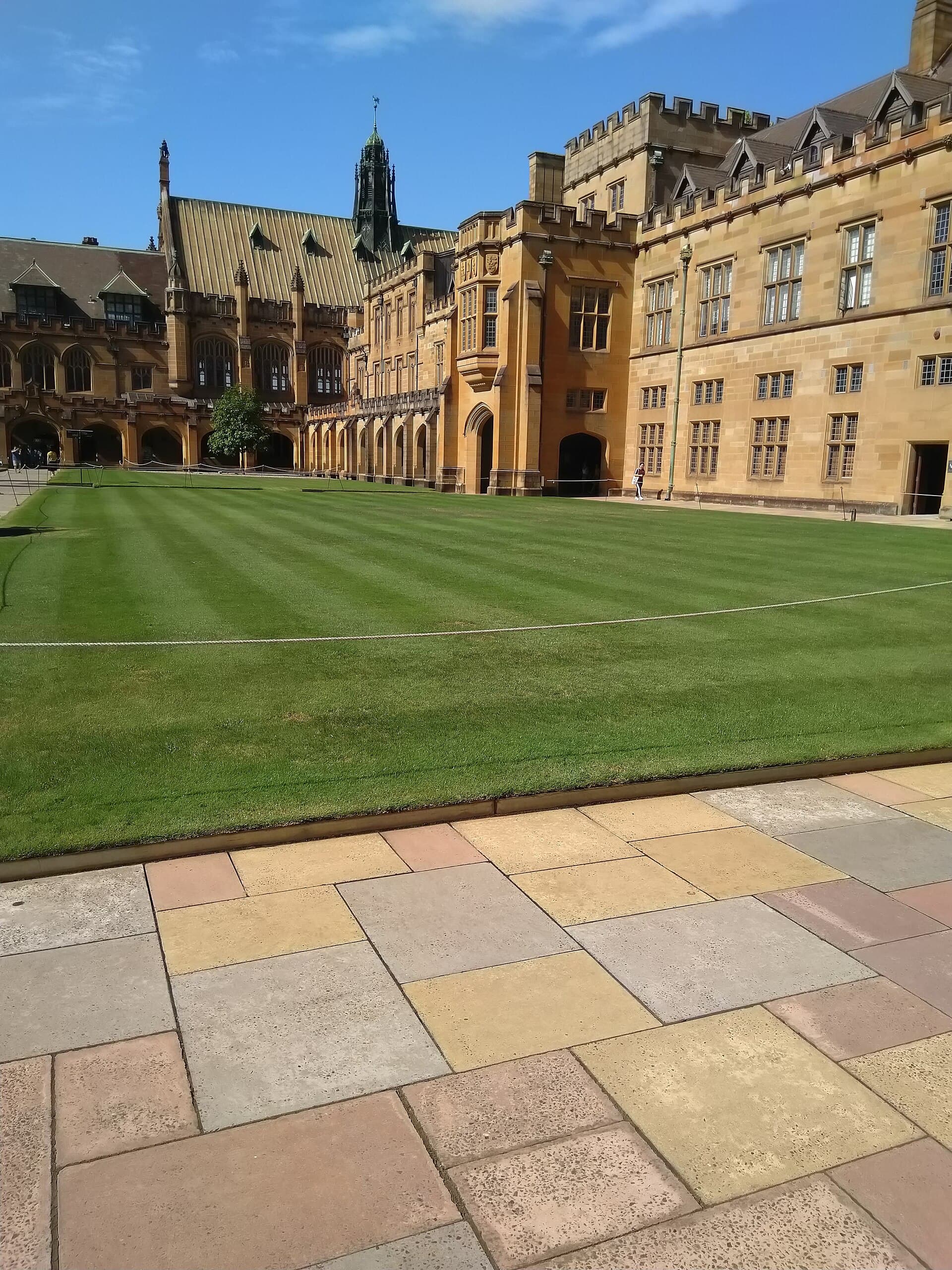
Photograph: Cinephile20XX / Wikimedia Commons · CC BY-SA 4.0. See the image credits page.

Open Universities Australia is the most misunderstood brand in Australian online study. The name sounds like a university. The website looks like a university. The phone line will talk to you like a university. It is not a university. It is a privately owned marketplace — SEEK is the parent — that packages subjects from partner universities and sells them to people who want to study online without picking a single campus and living there.
That is useful. It is also how learners in Ballarat and Broome end up enrolled in a Griffith subject, paying a UniSA student services fee shape of invoice, and wondering why the academic integrity email came from a third domain. This piece is the operating manual the brochure skips.
If you are still deciding whether you want a university subject at all, start with how to choose an online short course. OUA is a particular aisle in the platforms hub, not a personality.
What OUA is, in one paragraph
You apply through OUA. OUA matches you to a subject offered by a partner university. The partner teaches, assesses and (if you pass) records the result. OUA handles a lot of the front door: search, some enrolment administration, marketing, and a student-advice layer. When it works, you get a real university unit without moving to the campus that owns it. When it fails, you discover that “OUA support” and “faculty support” are different rooms, and your assignment is due in the one that does not answer chat after 5 pm AEST.
Partners change. Over recent years the list has included names such as Curtin, Griffith, Macquarie, RMIT, Swinburne, the University of South Australia, Murdoch and La Trobe, among others. Do not memorise a logo wall. Check the current offering page for the subject you want, and treat the partner as the legal teacher.
What it is not
This list saves people money.
- Not a university. OUA does not award degrees in its own name in the way the University of Queensland does. The testamur, if you finish a degree, is the partner’s.
- Not TAFE. It is not a registered training organisation issuing AQF certificates and diplomas from a training package. If you need a Certificate IV in something a regulator recognises, look at TAFE or an RTO, not OUA. The comparison with TAFE Digital and university microcredentials is the next tab, not this one.
- Not a HELP lender. The Commonwealth lends; the university (or the approved provider) is the one whose offering is HELP-enabled. OUA is in the middle of the paperwork, which is why the portal can show a FEE-HELP balance and still not be the decision-maker when a census dispute starts.
- Not a short-course marketplace. A six-week Coursera specialisation is not the same product as a 12-week undergraduate unit with a census date and a fail grade that stays on a transcript. Do not enrol in OUA because you wanted “a bit of psychology”. Undergraduate psychology units assume a semester of labour.
- Not automatically cheaper. Commonwealth supported places, when available, can be good value. Full-fee undergraduate and postgraduate units are not a bargain just because they are online. Read the dollar figure next to the subject, not the “study from anywhere” headline.
If you wanted a $25 software tutorial, you are in the wrong shop.
Partner universities, and why the letterhead matters
The partner is the institution that will:
- Set the curriculum and the assessment.
- Run the learning management system you will actually live in — often Moodle, Canvas or Blackboard under a university skin.
- Decide academic misconduct, extensions, and whether your medical certificate is good enough.
- Put a result on a transcript you can later show another university.
OUA’s brand on the enrolment confirmation is not a substitute for any of that. When you email “the uni” at 11 pm because Turnitin ate a file, you need the partner’s student centre, not the OUA chatbot.
Practical consequence: two “Introduction to Marketing” subjects on the OUA site can be taught by two universities with two textbooks, two exam formats, and two attitudes to late work. Compare the unit outline, not the subject title. If the outline is not linked until after you apply, wait. Applying is not free of consequences once an offer is accepted.
Single subjects versus degrees
OUA’s honest killer feature is the single subject. You can take one unit in a study period, pay for that unit, and stop. That is how a nurse in Geelong tests whether postgraduate public health is a life she wants, and how a public servant in Canberra fills a gap a promotion panel mentioned.
Single subjects are still university subjects. They have prerequisites, assumed knowledge, and a workload that is usually described as 10 to 12 hours a week and is often more if you have been out of study since 2011. They can fail you. A fail on a university transcript is not the same as abandoning a Udemy course.
Degrees through OUA are assembled from those subjects, sometimes from more than one partner, under rules the lead university sets. The lead university is the one whose degree you are enrolled in. Cross-institutional and cross-partner credit is possible and bureaucratic. Assume nothing transfers until the receiving faculty says it does, in writing.
A sensible pattern:
- Take one subject as a single unit.
- Finish it.
- Then apply to the degree, asking for credit for the unit you already passed.
The reverse pattern — enrol in the degree because the landing page said “pathway”, then discover the single unit you liked is not in the degree’s core — is how people collect orphan subjects.
HELP, fees, and the dollars on the page
Undergraduate subjects may be offered as Commonwealth supported places or as full-fee. Postgraduate subjects are usually full-fee. Eligible students can often use HECS-HELP on a CSP offering and FEE-HELP on a full-fee offering, subject to citizenship, residency, Unique Student Identifier, tax file number, and the usual HELP balance rules.
We go through the loan products properly in FEE-HELP, VET Student Loans and online study. The OUA-specific points are narrower:
- The offering matters. The same subject title can appear in more than one offering. CSP and full-fee are not the same price. A CSP undergraduate unit in the humanities might land in the few-hundred to low-thousands band of student contribution. A full-fee unit in business or IT can sit between about $2,000 and $4,000 a subject, sometimes more. Always read the offering you are clicking.
- Student services and amenities. Some partners still charge an amenities amount. Online does not always mean $0 extras.
- Textbooks and software. A $90 e-text and a $40-a-month statistics package are not in the HELP figure. SPSS, Adobe, and specialised lab tools have a habit of appearing in week two.
- HELP is a loan. The debt is indexed. “Deferred” is not “free”. If you are taking a single subject for curiosity, paying upfront or not enrolling at all can be the adult option.
If you are not a citizen or a qualifying humanitarian visa holder, assume no HELP and price the subject as private tuition. International-looking fees on an “online, study from Australia” page are easy to miss because the citizenship question sits two screens later.
Census dates: the only date that matters more than the exam
Every HELP-enabled unit has a census date. Before census, you can usually withdraw without a financial liability for that subject (and without a fail). After census, you have the debt, or you have paid, even if you never logged in.
Census is not a vibe. It is a published date, typically a few weeks into the study period. OUA and the partner will both mention it. Put it in your phone with a two-week warning. Put a second reminder at 72 hours. Portals have maintenance windows. “I couldn’t get in on the day” is a genre of email student centres have laminated.
Related dates that are not census:
- The last day to enrol. Missing this means you are not in the subject. That is annoying, not expensive.
- The last day to withdraw without academic penalty. This can be later than census. Withdraw then and you may avoid a fail but still keep the debt. People confuse the two and are shocked by the HELP statement in October.
- Assignment due dates. Irrelevant to the loan. Very relevant to the grade.
If your life is about to change — a baby, a FIFO swing, a restructure — withdraw before census. You can re-enrol next study period. You cannot un-index a debt.
Withdrawing, failing, and the email you should send
Withdraw through the portal, not by ghosting. Ghosting after census is how a fail and a debt arrive together.
Steps that work:
- Open the OUA and partner portals and find the official withdraw action. Screenshots help later.
- Note the census and academic-penalty dates for that offering.
- If you are before census, withdraw and wait for a confirmation email. Keep it.
- If you are after census and something serious happened — hospital, family death, family violence — ask the partner about special circumstances and HELP remission. There is a process. It wants documents and it has deadlines. It is not a chat with a recruiter.
- If you simply disliked the subject after census, you own it. Finish or fail. Remission is not for boredom.
Changing your mind about a career is not, by itself, special circumstances. The legislation is colder than the brochure.
Study periods, not semesters
OUA subjects often run in study periods that do not match the autumn/spring story a sandstone university tells on open day. Four or more study periods a year is common. That is good if you want to start in November. It is bad if you assumed a long summer and the next period starts on 1 December.
Workload does not shrink because the calendar is modular. A 12.5 credit-point undergraduate unit is still a 12.5 credit-point unit. Stacking two units in a study period while working four days a week is how people withdraw after census.
One unit, one study period, a job: that is a full load for most adults. Two units is a choice you should be able to defend to a partner who will notice if you disappear.
Credit, pathways, and the word “towards”
OUA marketing loves “towards”. Towards a degree, towards a career, towards a new you. Credit is a faculty decision. A subject that sits in an OUA bachelor of business may not sit in the on-campus version at the same university, or in a competitor’s degree in another state.
Before you treat three single subjects as a cheap first year:
- Ask the destination faculty, in writing, whether those exact unit codes credit.
- Check whether the units are core, elective, or leftover.
- Check currency. A unit you passed in 2019 may fall outside a ten-year credit rule.
Pathways into teaching, nursing and other registered professions have extra boards. OUA is not a shortcut around the Australian Health Practitioner Regulation Agency or a state teacher-registration body. If the job is regulated, start with the regulator’s list of approved programs, then see whether OUA is how that program is delivered.
Who should use it
Use OUA when you want a real university unit, you need to start in a study period that is not March, you like the option of a single subject, and you are prepared to treat census like a legal deadline.
Skip OUA when you wanted a weekend with Excel, you need an AQF VET qualification, you need a campus clinic or a lab that cannot be done in the kitchen, or you were hoping someone would hold your hand through the LMS. The partners are universities. They will email you a 40-page outline and assume you can read it.
Be careful when you are shopping by degree title rather than by partner and unit outline. “Bachelor of something online” is not a sufficient spec. The partner’s graduate outcomes, professional accreditation, and credit rules are the spec.
OUA is a door. The room on the other side still has a census date, a fail grade, and a lecturer who does not work for the marketplace. Walk through it on purpose.
Questions readers send the desk
- Is Open Universities Australia a university?
- No. It is a company that sells access to subjects taught by partner universities. Your transcript, if you pass, comes from the partner, not from OUA.
- Can I use HECS-HELP or FEE-HELP through OUA?
- Often yes, if you are eligible and the subject is offered in a HELP-enabled offering. Census dates still apply. Missing census is how people acquire a debt for a subject they never started.
- Can I take one subject without committing to a degree?
- Yes. Single-subject study is a normal use of OUA. Some subjects later credit into a degree; some do not. Read the partner’s credit rules before you treat a one-off as a pathway.